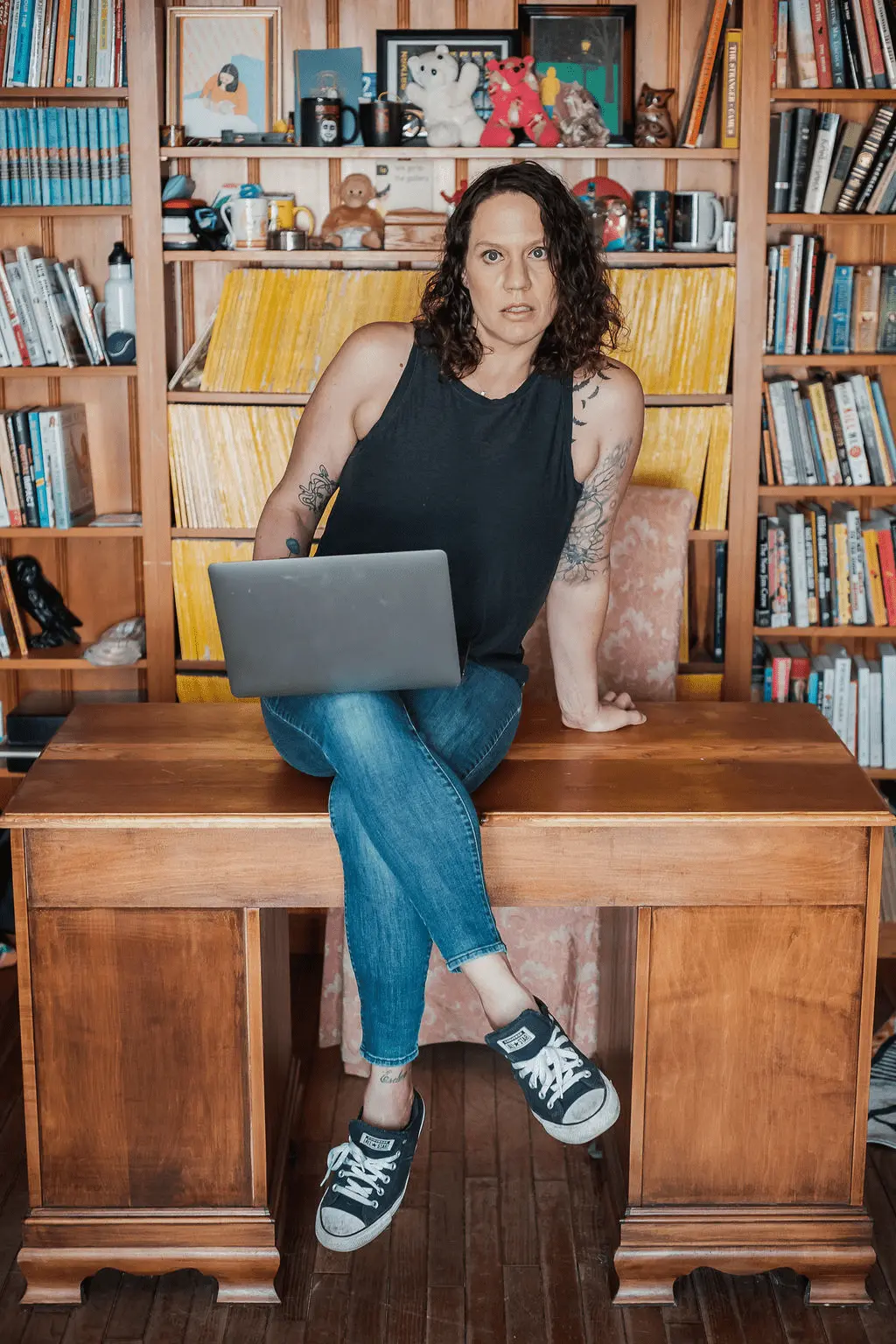
I earn credibility through my writing. Writing has been my medium since early childhood — literally: a short story I wrote as a kid, "The Dad Walks Alone," was published in All the Ways Home: Parenting and Children in the Lesbian and Gay Communities.
Artificial intelligence has complicated what that means.
There's a longer argument to make about how capitalism has always been suspicious of creative labor — how the public consumes the work of writers, artists, photographers, and filmmakers as entertainment while treating those same people as hobbyists rather than professionals.
AI has sharpened that tension considerably. A ChatGPT account or a Claude subscription now makes it possible to produce things that once required training and talent. I won't wade into debates about the quality of what LLMs produce. But I do think about what it means for people like me.
Here's where I land: I use AI in my own work.
In my journalism work, I use AI to transcribe interviews and to help isolate quotes from lengthy interview recordings, which I then verify myself. I will have it organize the headings prior to writing. I always write my own text: fiction, lyrics, poetry, scripts.
As a web developer, I use AI to think through framework choices, work through CSS — especially animations and gradients that would otherwise eat hours — and generate content I then edit and make my own.
I've always been drawn to remix. In college, I was deep in GIMP, layering text onto photos of myself, superimposing images, using filters that purists would have called cheating. I never thought of it as cheating.
In my more personal work — a collection of stories I've been shaping, on and off, for the better part of a decade, likely heading toward a memoir — I've used AI to help work through a multi-thousand-page medical document that is central to that project. That work is slow and strange and very much mine.
And yes: I ran this transparency statement through Claude before publishing it.